Lower blepharoplasty is surgery on the lower eyelids. It may address selected concerns such as bags beneath the eyes or excess lower eyelid skin. Assessment is needed to establish what is causing the appearance and whether surgery is appropriate. Lower eyelid surgery and double eyelid surgery address different areas and concerns.
Dr Jeremy Sun usually uses transconjunctival orbital fat repositioning, through an incision inside the lower eyelid, for eyebag surgery. His preference for the transconjunctival approach is guided by concern about lower eyelid retraction. The plan is customised to the person’s requirements; this approach does not eliminate the risk of eyelid position changes or other complications.
This page provides general information and should not replace consultation with a qualified medical practitioner. Suitability, risks, recovery and outcomes vary between individuals.
Why is there a groove beneath an eye bag?
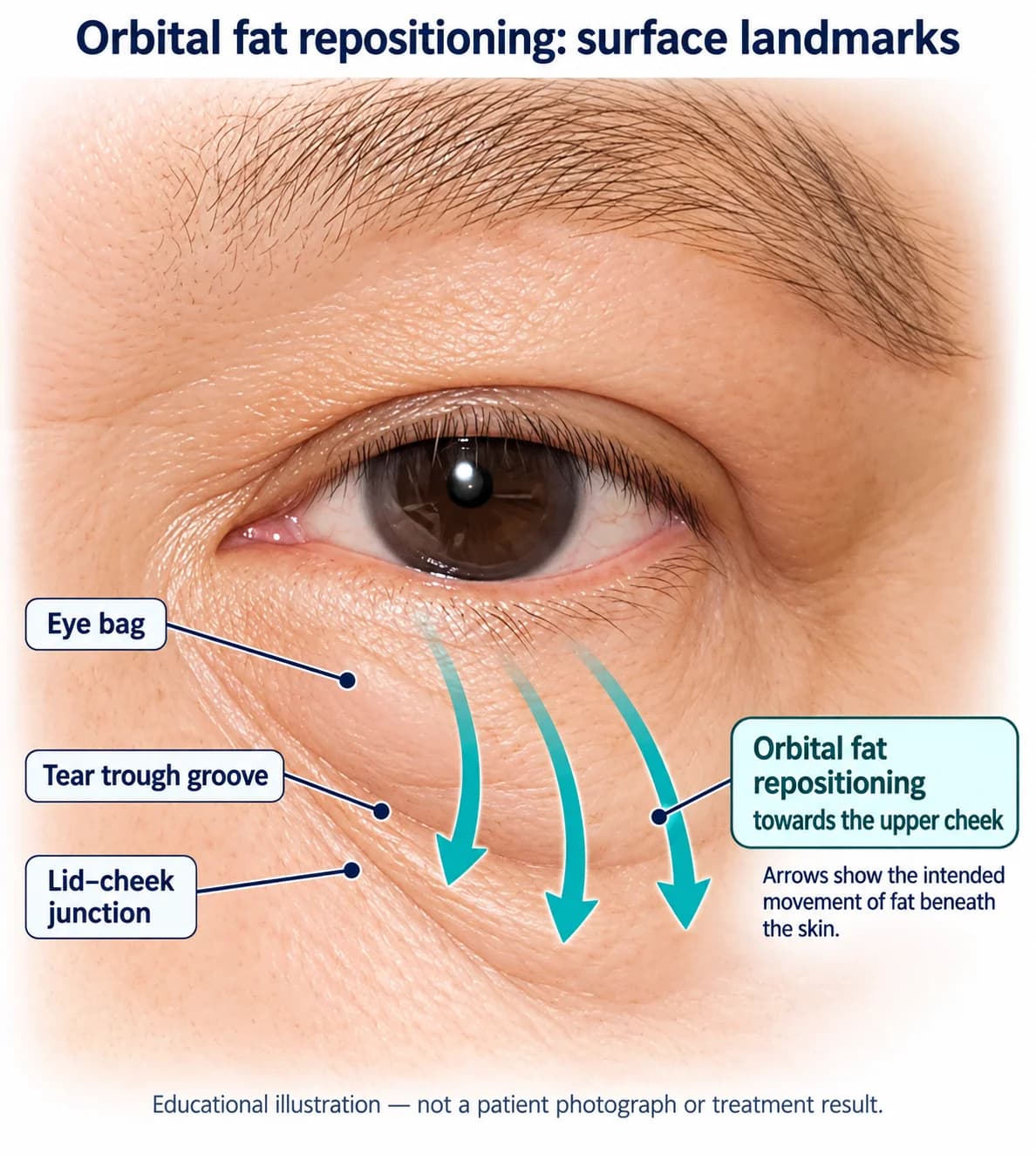
An eye bag is a bulge; the groove beneath it is a different part of the contour. Dr Sun explains that supporting ligaments tether the skin and soft tissues to the bone around the lower eye socket, called the orbital rim. This tethered transition can make the boundary beneath a bag more apparent.
The tear trough ligament towards the inner corner continues into the orbicularis retaining ligament further out. These attachments help explain the transition between the lower eyelid and cheek. The groove is not, by itself, proof of bone resorption: the bag, surrounding hollow and underlying support need to be assessed together.
This distinction matters when planning treatment. Reducing a protruding bag alone may not address the hollow beneath it. A tear trough implant is a separate consideration for selected patients with bone-related hollowing, rather than a routine answer to every visible groove.
| Concern | What is being assessed | Why the distinction matters |
|---|---|---|
| Protruding eye bag | The lower-eyelid bulge and the tissues contributing to it. | Treatment of a bag may leave a separate hollow or groove. |
| Groove beneath the bag | The tethered eyelid-to-cheek transition and surrounding contour. | A visible groove does not automatically mean an implant is needed. |
| Sunken under-eye area | The hollow and whether underlying bone support contributes. | Dr Sun may discuss a tear trough implant in selected patients with bone-related hollowing. |
| Loose lower-eyelid skin | The amount and quality of lower-eyelid skin and whether it contributes to the concern. | A transconjunctival incision treats tissues through the inner eyelid; the incision itself does not remove excess skin, so the proposed plan may differ. |
Is lower eyelid surgery appropriate for your concerns?
Discuss the changes you wish to address, previous eye or facial procedures, medications and eye symptoms. The consultation should explain which concerns the proposed operation may address and which may remain. Ask whether an alternative approach or no treatment would better fit your situation.
Transconjunctival orbital fat repositioning: treating the bag and hollow
Transconjunctival means access through the inner surface of the lower eyelid, rather than through an external skin incision. It is not an incision into the eyeball. This access can be used to treat lower eyelid fat; the incision itself does not remove excess lower eyelid skin.
Dr Sun releases the ligamentous attachments through an incision inside the lower eyelid and redistributes orbital fat into the hollow beneath the eye, towards the upper cheek. The aim is to soften the eyelid-to-cheek transition and reduce reattachment of the released tissues.
The tissues still heal after surgery. Reducing reattachment or re-tethering is a treatment aim, not a guarantee that the groove will not return. The fat-repositioning plan is customised to the individual anatomy and concerns.
Dr Sun’s usual preference for this approach is part of an individual treatment plan. The consultation should clarify whether it meets your needs or whether a different approach is appropriate. Ask how your proposed plan addresses the concern while protecting eyelid position and eye comfort.
How is your lower blepharoplasty plan customised?
The approach depends on the examination and the intended change. Your surgeon should explain the proposed incision, how the tissues would be treated, the expected scar and the limitations of the plan. Ask why the proposed approach is suitable for your eyelids and how eyelid position and eye comfort will be protected.
For separate upper-eyelid crease concerns, read the Asian eyelid surgery guide. If the concern is part of broader facial rejuvenation planning, the face and neck assessment guide explains how eyelid, volume and lifting decisions are separated. Reading these guides does not mean procedures need to be combined.
- Which concerns would the proposed operation address?
- What would be done to the lower eyelid tissues?
- Would an external incision or another approach be needed?
- What changes may remain after treatment?
Sunken under-eyes and tear trough implants
A bag beneath the eye and a sunken under-eye area are different concerns. Dr Sun may discuss a tear trough implant in selected patients when hollowing is associated with bone resorption. The decision is customised to the person’s requirements rather than included routinely in eyebag removal.
If an implant is being considered, ask how it relates to the concern, what alternatives are available and what additional risks, recovery and follow-up it involves. Implant placement is a separate treatment decision and requires its own discussion before consent.
Recovery and follow-up after eyebag surgery
Swelling, bruising and discomfort can occur after eyelid surgery. Eye symptoms and activity restrictions should be discussed before treatment. Follow the individual wound-care, eye-care and follow-up instructions provided by your surgical team.
Returning to work and resuming exercise are separate decisions; obtain advice for your planned activities rather than relying on a universal recovery deadline.
Risks and limitations of lower blepharoplasty
Risks include bleeding, infection, scarring, dry eyes, difficulty closing the eyes and changes in lower eyelid position. Further surgery may be needed. Vision changes can occur; permanent visual loss is a very rare but serious risk.
These risks and their relevance to your proposed procedure should be explained before consent. A transconjunctival approach does not guarantee freedom from lower eyelid retraction. No particular cosmetic outcome is guaranteed.
Eyebag removal cost and quotation in Singapore
Request an individual quotation after assessment and clarification of the proposed treatment. Ask which surgeon, facility, anaesthesia, medication and follow-up components are included.
Questions to ask before lower eyelid surgery
- Is lower eyelid surgery appropriate for the concern I have?
- Which concerns may remain after the proposed treatment?
- What approach would you recommend, and why?
- What restrictions and follow-up will I need?
- Which complications should I understand, and how would they be managed?
Anatomy reference: Wong, Hsieh and Mendelson: the tear trough ligament and its anatomical relationship to the lower-eyelid groove (Plastic and Reconstructive Surgery, 2012). This anatomical study explains tissue attachments; it does not predict an individual treatment result.
Further patient information: ASPS eyelid surgery approaches and ASPS eyelid surgery risks.
FAQs
Why can an eye bag have a hollow or groove beneath it?
Supporting ligaments tether the skin and soft tissues around the lower orbital rim, helping define the transition between the eyelid and cheek. A protruding bag can make this groove more apparent. The bag, hollow and bone support should be assessed together; a groove alone does not establish bone resorption or a need for an implant.
Is eyebag removal the same as double eyelid surgery?
No. Lower blepharoplasty addresses the lower eyelids, while double eyelid surgery addresses the upper eyelid crease. The right procedure depends on the concern and examination.
What does transconjunctival eyebag removal mean?
The incision is made on the inner surface of the lower eyelid, not into the eyeball. Dr Sun usually uses transconjunctival orbital fat repositioning: releasing ligamentous attachments and redistributing orbital fat into the hollow beneath the eye towards the upper cheek. The aim is to soften the eyelid-to-cheek transition and reduce reattachment, with the plan customised to individual requirements.
Does a transconjunctival approach prevent lower eyelid retraction?
Dr Sun’s preference is guided by concern about lower eyelid retraction, but no approach eliminates this risk. Suitability, eyelid position and the risks of the proposed plan must be assessed and discussed individually.
How long does recovery take after lower blepharoplasty?
Recovery varies. Swelling, bruising and discomfort can occur, and restrictions depend on the individual plan. Ask your surgical team when you can return to work and resume specific activities.
How much does eyebag removal cost in Singapore?
An individual quotation should follow assessment and clarification of the proposed procedure. Ask what surgeon, facility, anaesthesia, medication and follow-up components are included.
Could I need a tear trough implant for sunken under-eyes?
In selected patients, Dr Sun may discuss a tear trough implant when under-eye hollowing is associated with bone resorption. It is not a routine part of eyebag removal; suitability, alternatives and additional risks must be discussed individually.
Related pages
Enquire about assessment
If you would like to discuss whether this procedure or treatment area is relevant to your situation, please submit an enquiry. A formal consultation is needed before any personalised advice can be given.