Choosing a plastic surgeon in Singapore should be more than choosing a procedure name, package or photograph. The safest decision starts with understanding the surgeon’s training, the procedure’s limits, the alternatives, and the risks that apply to your anatomy and health.
Dr Jeremy Sun is a Senior Consultant Plastic Surgeon in Singapore with clinical practice spanning aesthetic surgery, reconstructive microsurgery, breast reconstruction, lymphedema surgery and lymphatic surgery. This page is intended as general educational information for patients preparing for consultation.
This page does not replace consultation with a qualified medical practitioner. Suitability, risks, recovery and outcomes vary between individuals.
Who is Dr Jeremy Sun?
Dr Jeremy Sun is a Senior Consultant Plastic Surgeon in Singapore, also listed professionally as Sun Mingfa Jeremy and on Lymphedema Asia as Dr Jeremy Sun Mingfa. These names refer to the same doctor. His practice includes aesthetic surgery, reconstructive microsurgery and lymphatic surgery.
Patients can cross-check his background through his CGH doctor listing, training and fellowships, and selected publications. His Lymphedema Asia profile focuses on lymphoedema assessment and lymphatic surgery.
Professional leadership
The Academy of Medicine, Singapore lists Dr Jeremy Sun as Chairman of the Chapter of Plastic, Reconstructive & Aesthetic Surgeons, College of Surgeons, Singapore, for the 2025–2027 board term. The Chapter’s work includes postgraduate education, professional standards and advisory opinions. See the official Chapter board and responsibilities.
Procedure-specific patient information
The following guides explain the options, suitability, risks and recovery considerations to discuss during an individual consultation.
Where can patients enquire about a private consultation?
Private consultation enquiries are handled through Astrid Plastic Surgery at 290 Orchard Road, #09-01/02, Paragon Medical, Singapore 238859. Call +65 6530 3573 or use the consultation enquiry form. View Dr Jeremy Sun’s Google Maps listing for directions.
Why I pursued dedicated lymphoedema fellowship training
Dr Jeremy Sun completed dedicated HMDP fellowship training in comprehensive multidisciplinary lymphoedema management and lymphatic surgery in Japan. The training encompassed management of lymphoedema as a whole, alongside lymphatic surgery.
Reflecting on his decision, Dr Sun explains: “During my local surgical training, I remained sceptical about lymphoedema surgery. My exposure was limited, and I had unanswered questions about how the procedures worked and what influenced their outcomes.” Learning about the work of Japanese teams around 2020 prompted him to seek a deeper understanding; in 2022 he decided to pursue dedicated training.
His account describes how sustained exposure to multidisciplinary care, lymphaticovenular anastomosis (LVA) and lymphatic reconstruction broadened his understanding of treatment selection and the limits of his earlier experience.
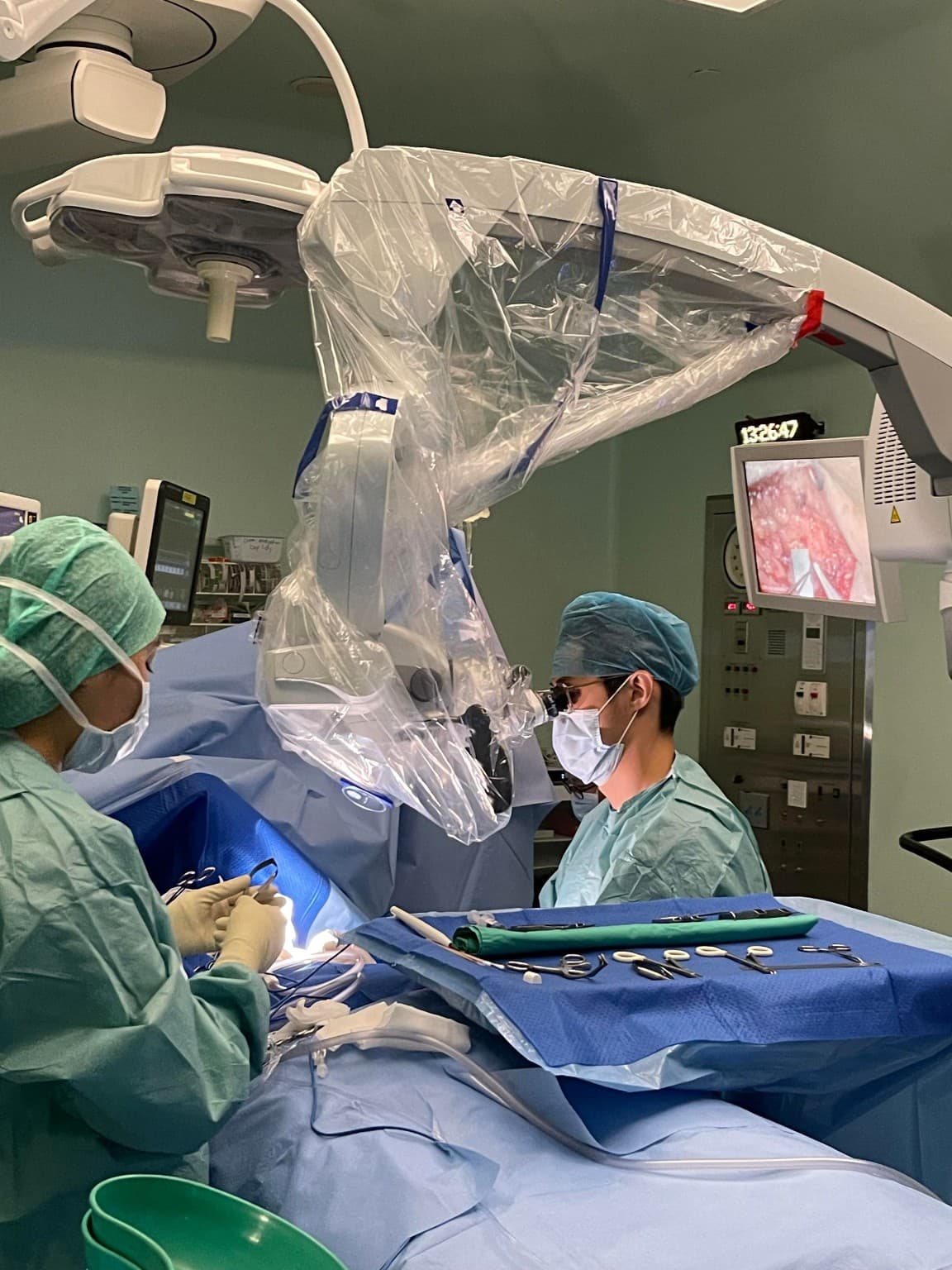
Read the full Q&A about Dr Jeremy Sun’s dedicated lymphoedema training on Lymphedema Asia.
How should patients evaluate a plastic surgeon in Singapore?
Patients searching for a plastic surgeon in Singapore often compare credentials, procedure experience, consultation style and safety systems. A useful starting point is to check whether the doctor has recognised specialist plastic surgery training, whether the planned procedure is within the surgeon’s regular scope, and whether consultation includes a balanced discussion of suitability, alternatives, recovery and risks.
- Check MOH specialist accreditation and plastic surgery training background.
- Ask about relevant reconstructive and aesthetic experience for the procedure being considered.
- Clarify where surgery would be performed, the anaesthesia plan, follow-up arrangements and safety protocols.
- Discuss realistic benefits, limitations, scars, recovery, possible complications and non-surgical or alternative options.
- Be cautious with advertising that implies assured outcomes or unsupported “best” or “top” claims.
Check specialist plastic surgery credentials
Patients should understand whether the doctor is trained as a specialist in plastic surgery and whether the surgeon’s experience matches the procedure being considered. Plastic surgery training covers both aesthetic and reconstructive problems, including soft-tissue handling, scars, wounds, breast surgery, facial surgery, microsurgery and revision problems.
- Ask about specialist registration and plastic surgery training.
- Look for hospital appointments, academic or teaching roles, and relevant surgical focus areas.
- Ask how often the surgeon manages the type of problem you have, including revision or complication scenarios.
- Be cautious with claims that imply assured results or superiority without objective context.
Aesthetic surgery and reconstructive judgement both matter
Aesthetic surgery requires judgement about proportion, scar placement, tissue quality and patient goals. Reconstructive plastic surgery adds experience in anatomy, wound healing, microsurgery, trauma, cancer reconstruction and complex tissue problems. For many patients, the two skill sets overlap.
For example, breast aesthetic surgery should still consider breast health and long-term follow-up. Rhinoplasty should consider nasal function as well as shape. Body contouring should distinguish fat, skin laxity and muscle separation. Eyelid surgery should consider ptosis, asymmetry and eyelid function.
What a useful plastic surgery consultation should cover
Patients who do not already know Dr Jeremy Sun often need to understand the assessment process before deciding whether to book. A consultation should clarify the patient’s concern, medical history, anatomy, treatment goals and whether surgery is actually the right option.
In Dr Sun’s practice, the discussion is framed around suitability and treatment selection rather than a one-size-fits-all procedure. Depending on the concern, this may include examining tissue quality, scars, asymmetry, breast or facial proportions, body-contouring factors, previous surgery, wound-healing risks and realistic recovery needs.
- Fit: whether the procedure matches the patient’s anatomy, goals and health.
- Options: surgical, non-surgical or staged alternatives where relevant.
- Limits: what surgery can improve, what it cannot change, and where individual variation matters.
- Safety: anaesthesia, facility, recovery, warning signs and follow-up planning.
Plastic, reconstructive and aesthetic surgery scope
Patients searching for a plastic surgeon in Singapore may be considering aesthetic, reconstructive, or medically indicated procedures. Dr Jeremy Sun’s practice spans plastic, reconstructive and aesthetic surgery, with patient education covering breast, body, facial aesthetic surgery, reconstructive microsurgery and lymphatic surgery.
Suitability, risks, recovery and expected outcomes should be assessed during an individual consultation. This guide links to procedure-specific education pages so patients can prepare questions before seeking personalised medical advice.
Questions to ask before plastic surgery
- Am I suitable for this procedure, or would another option be safer or more realistic?
- What are the limits created by my anatomy, skin quality, scars or medical history?
- Where will the scars be, and how do they usually mature?
- What anaesthesia, downtime, activity restrictions and follow-up are expected?
- What complications should prompt urgent medical attention?
- What revision risks or long-term maintenance should I understand?
Related plastic surgery pages
Professional profiles and public education links
External and institutional profiles can help patients cross-check a surgeon’s public appointments, hospital association and professional education activity.
FAQs
How do I check if a doctor is a plastic surgeon in Singapore?
Patients can ask about specialist registration, plastic surgery training, hospital appointments, scope of practice and whether the doctor has experience in the procedure being considered. A formal consultation is needed before personalised advice.
Is a plastic surgeon the same as an aesthetic doctor?
No. Plastic surgery is a surgical specialty that includes aesthetic surgery, reconstructive surgery, microsurgery, trauma, burns, breast reconstruction and other complex soft-tissue work. Aesthetic medicine may include non-surgical treatments but is not the same as specialist plastic surgery training.
What should I ask during a plastic surgery consultation?
Ask about suitability, alternatives, anaesthesia, scars, recovery, risks, revision possibility, warning signs, follow-up, and what result is realistic for your anatomy.
Can online information tell me which procedure I need?
No. Online information can help you prepare, but procedure choice depends on clinical assessment, anatomy, medical history and goals.
Enquire about assessment
If you would like to discuss whether a procedure is relevant to your situation, please submit an enquiry. A formal consultation is needed before personalised advice can be given.